The thing nobody tells you about sensitivity after 40
Your clitoris doesn't stop working at 40. But the signal between it and your brain does start to lose its volume. Some women notice this shift as a whisper. Others describe it as dialing down from an 8 to a 4 or 5. And here's what matters: it's not psychological, it's not relationship trouble, and it's not permanent. It's tissue.
Networks of nerve endings thin slightly as estrogen decreases. Collagen production slows. The tissue around your clitoris changes texture. A vibrator that worked perfectly at 35 can feel like you're holding a phone on silent mode. And that's when most people make the mistake of buying a more intense vibrator. More intensity almost never solves this. A different mechanism does.
Why regular vibrators miss the mark
Traditional vibrators rely on friction and direct mechanical stimulation. They work by shaking against tissue at varying frequencies. When tissue density changes and sensitivity drops, you need faster movement, more pressure, or both. That path leads nowhere productive. You end up with toys that feel harsh, overstimulating, or leave you numb.
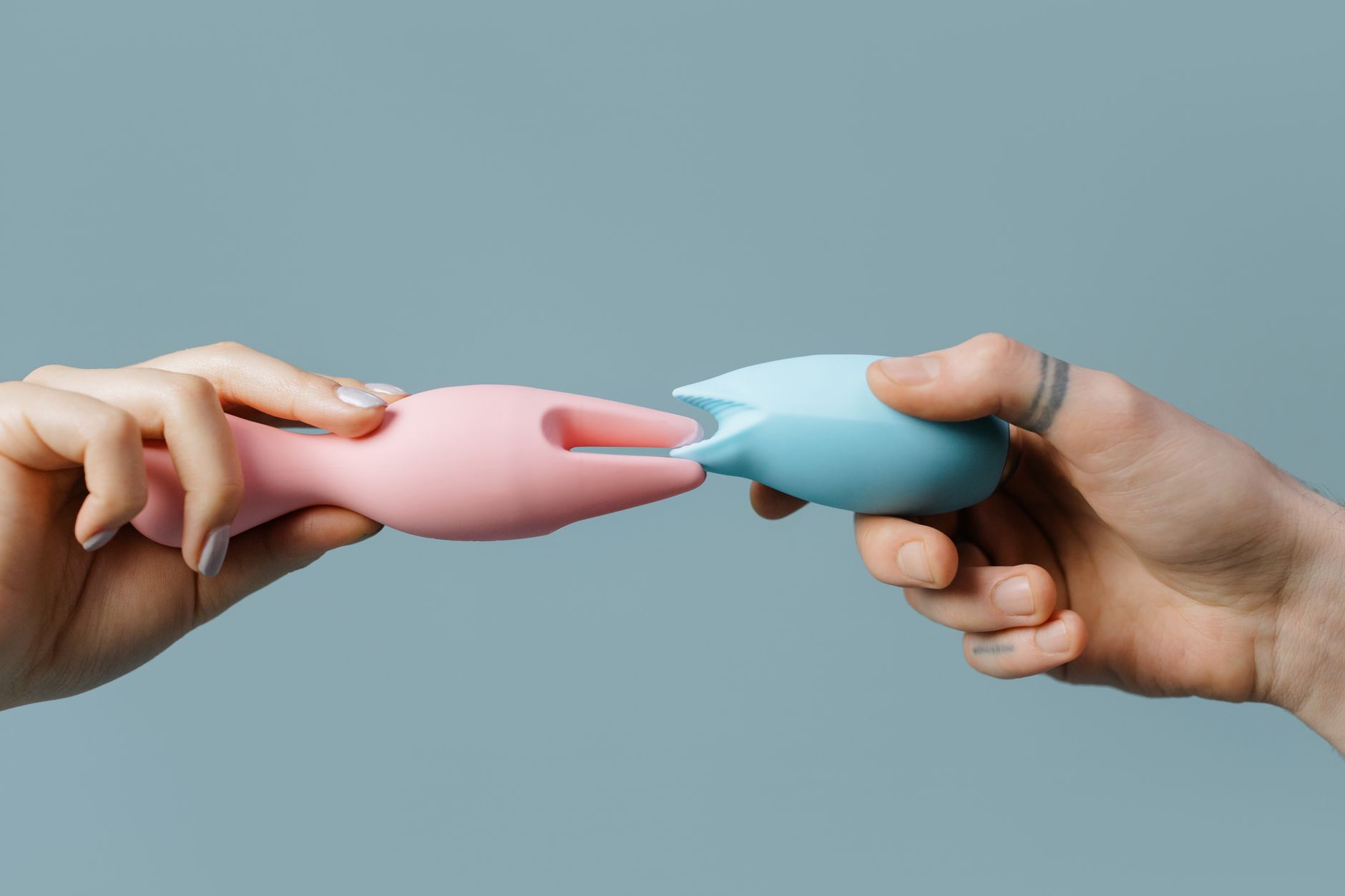
Lemon vibrators work on a completely different principle. They use air-suction technology to create a gentle pulse-and-release cycle. Instead of friction, suction stimulates the nerve clusters in and around your clitoris without the same mechanical wear. Think of the difference between scratching and tapping. One is friction. One is rhythm.
For women over 40 with reduced sensitivity, this shift in mechanism is the difference between "fine, I guess" and "oh, there it is."
How the nerve density actually changes
Let me be specific about what's happening physiologically. Your clitoris has roughly 8,000 nerve endings concentrated in the glans. Most research shows this density remains stable over your lifetime. What does change is how quickly signals travel and how much stimulation is required to trigger a response.
Estrogen supports myelin sheath integrity. Myelin is the fatty coating around nerves that speeds up electrical signals. Lower estrogen means slower signal transmission. You're not losing nerves. You're experiencing a slight delay and a higher activation threshold.
Air-suction technology bypasses some of this friction loss because it creates a different kind of stimulation. It engages deeper tissue layers and creates a rhythmic pattern that doesn't require the same amplitude to feel noticeable. A lemon clitoral vibrator pulse at a lower intensity can feel more powerful than a traditional vibrator at twice the strength because the sensation pattern is fundamentally different.
The sensitivity sweet spot
Here's what I typically recommend to clients over 40 who are noticing reduced clitoral response. Start at the lowest setting. Most women think this is a compromise. It's not. The lowest setting on a lemon vibrator is often more effective than medium on a traditional toy because the mechanism itself is more efficient.
Speed up gradually. Give your nervous system 30 to 60 seconds to adjust between intensity levels. Your body is recalibrating, not just responding. Rushing through settings is like turning up a volume knob too fast. Your brain can't actually process the change.
Many women find their perfect range sits between settings 2 and 4 on most lemon vibrators. They also report that this sweetspot requires less mental focus to reach orgasm. That matters more than people realize.
Why lubrication changes the equation too
Reduced sensitivity often arrives alongside reduced natural lubrication. These aren't the same issue, but they're connected. Thinner tissue is more sensitive to friction, which makes external lubrication almost essential when using any vibrator.
Water-based lubricant becomes your partner here. Use it generously. It changes the entire sensation profile. With lubrication, you're experiencing suction plus glide. Without it, you're only getting suction. Both work, but the combination is richer.
I've had clients tell me that adding lube transformed a toy from "meh" to genuinely pleasurable. They weren't wrong about the toy being less intense. They just needed the missing variable.
The warm-up factor that actually matters
Women over 40 often describe taking longer to become aroused. That's not a bug. It's a different rhythm. Your arousal curve is shallower and slower. This is where patience beats intensity every single time.
Warm up for 15 to 20 minutes before using a lemon clitoral vibrator. This can mean manual stimulation, partnered touch, or just time with the device on lower settings while you focus on sensation rather than outcome. This warm-up isn't foreplay. It's activation. You're priming the nervous system, increasing blood flow, and allowing time for natural lubrication production.
Women who skip this step often report that lemon vibrators don't work for them. Women who commit to it report it's the best purchase they've made. The difference is almost entirely in the setup.
When to worry and when to celebrate
Reduced sensitivity is normal. Pain during use is not. If your clitoris feels tender, raw, or sore after using a toy, something's off. You might be pressing too hard, moving too fast, or needing more lubrication. Dial it back.
Orgasms changing shape is normal. They might feel shorter, more localized, or require more focus. Some women over 40 describe their orgasms as more intense but less widespread than when they were younger. That's tissue change. That's fine.
Complete numbness despite adequate warm-up and the right toys warrants a conversation with a gynecologist. Nerve compression, untreated thyroid issues, or medication side effects can all contribute to significant numbness. These are usually fixable.
The partner conversation that actually helps
If you have a partner, this transition is an opportunity, not a problem. But only if you name it directly. "I'm noticing I need more time and different sensation" is completely different from "nothing feels good anymore" or saying nothing at all.
Partners often misinterpret reduced sensitivity as reduced desire for them. It's not. It's a physiological shift that actually invites more creativity. How to use lemon vibrators during sex with a partner is worth reading together if penetrative sex is part of your intimacy. Many couples find this transition opens doors that were previously closed.
Beyond 40 gets better, not worse
Honestly though, I've watched enough women navigate this shift to tell you this: reduced sensitivity doesn't mean reduced capacity for pleasure. It means different access to it.
Many women over 40 report their best orgasms ever once they accept this change instead of fighting it. The permission to slow down, the knowledge of what works, and the willingness to use tools like lemon vibrators creates a kind of pleasure literacy that didn't exist at 25.
Your body isn't failing. It's just speaking a different language. Lemon clitoral vibrators are fluent in that language.
People also ask
Why do lemon vibrators feel different than regular vibrators for reduced sensitivity?
Lemon vibrators use air-suction technology instead of traditional vibration. Suction creates a rhythmic pulse-and-release cycle that engages deeper nerve clusters without the mechanical friction that can feel ineffective on thinner, less responsive tissue. For women over 40 experiencing reduced sensitivity, this mechanism is often more efficient because it doesn't require the same amplitude to feel noticeable. It's the difference between tapping and scratching. Both can work, but one is fundamentally different.
Can reduced clitoral sensitivity be reversed?
Partially, yes. Improved blood flow through exercise, adequate hydration, and stress reduction can help. Topical estrogen treatments can improve tissue thickness and sensitivity in some women. Using toys like lemon vibrators consistently may also improve nerve responsiveness over time through regular stimulation. However, some baseline changes after 40 are normal and permanent. The goal isn't to return to your 25-year-old body. It's to find what works for your current one.
How long should I wait before trying a higher intensity on a lem vibrator?
Give your body at least two weeks of regular use at comfortable settings before increasing intensity. Your nervous system needs time to adjust to the new mechanism. Many women find their optimal setting within the first few weeks and stay there. Jumping to higher intensities quickly often leads to overstimulation or numbness, which feels counterintuitive but is very real. Patience pays.
Is it normal to need lubrication with a lemon clitoral vibrator?
Absolutely. Lubrication becomes more essential after 40 because tissue is thinner. Using water-based lube generously actually improves sensation because it enables better glide along with suction. It's not a sign you're broken. It's an addition that makes the entire experience better. Many women think lube means they're "not getting aroused enough," but that's not how tissue biology works.
Should I use a lemon vibrator alone first or with a partner?
Start alone. You need to understand how your body responds without the variables of coordination, pressure, or performance concerns. Solo exploration takes three to four sessions. Once you know what feels good, introducing it with a partner is often easier because you can guide them. How to use lemon vibrators with a partner after years of solo play covers this transition.
Can medication affect my sensitivity and make lemon vibrators more important?
Yes. Antidepressants, hormonal medications, and blood pressure drugs can all reduce sensation and lubrication. If you've started a medication and noticed sensitivity changes, talk to your doctor about timing doses or switching medications. In the meantime, lemon vibrators and increased warm-up time can help compensate. The combination of medication adjustment plus the right tool often restores pleasure faster than either alone.
Reduced sensitivity after 40 isn't a personal failure or the beginning of the end. It's a signal that your body needs a different tool and a different approach. Lemon vibrators speak the language your body's speaking right now. That's not settling. That's listening.
If you're curious about whether a lemon vibrator might work for you, start with the lowest setting, use plenty of lube, and give yourself permission to explore without pressure. That combination alone changes everything.
Questions about what might work best for your body? Let's talk.