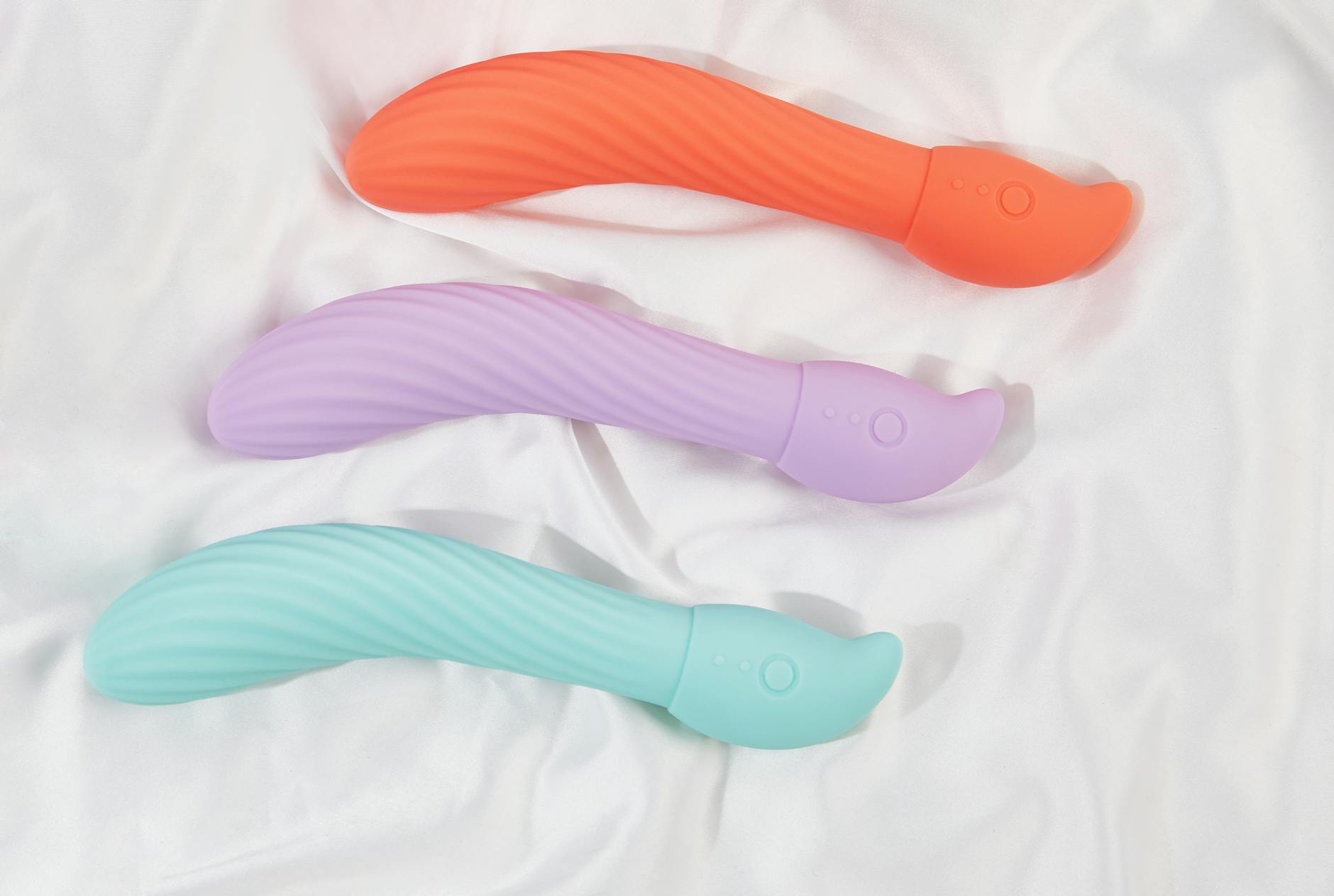
You get a lemon clitoral vibrator. You've read the hype. You expect fireworks. Instead, you get... something. But it's quieter than expected. Less overwhelming. Maybe less intense. And suddenly you're wondering if you made a mistake, or if something's wrong with how you're using it.
Let's start with the neurology. Your clitoris has about 8,000 nerve endings. When you've been using a traditional vibrator for months or years, those nerves have gotten used to a very specific type of stimulation: high-frequency vibration, usually between 80 and 400 vibrations per second, applied directly to sensitive tissue.
A lemon sucker works differently. It uses suction and gentle pulsing (usually 5 to 12 hertz). It's not vibration. It's a sustained pressure that mimics oral stimulation. The sensation is more localized, more nuanced, and honestly, less aggressive.
Your nervous system notices the difference immediately. Your body is basically saying, "Wait. What is this? This isn't the signal I'm expecting." That's not weakness on the toy's part. That's your sensory system doing exactly what it's supposed to do: recognizing something new.
The orgasms feel weaker for three overlapping reasons:
1. Your nerves are primed for vibration. After months of using a traditional vibrator, your clitoral nerve endings have become sensitized to that specific frequency range. Suction feels less intense partly because it IS a different stimulation type, and partly because you're neurologically expecting something else.
2. You're using it wrong (probably). With a lemon vibrator or similar clitoral suction toy, intensity isn't about how high you turn it. It's about positioning, seal, and sustained use. Most people start on a medium setting and then bail out before the suction really builds. That's like trying to orgasm in 30 seconds instead of letting the sensation layer.
3. Your body is being more precise. Suction targets the external clitoral structures more directly than vibration does. This can feel like less intense stimulation, but it often leads to more concentrated, longer-lasting sensations. You're not getting blasted with sensation. You're getting precision. That's actually better long term.
Most people need about 4 to 6 weeks to fully adjust to a lemon vibrator if they're coming from a traditional toy. Here's what that usually looks like:
Weeks 1-2: "This feels weird and not as good." You're comparing directly to what you know. Orgasms might feel softer, or take longer to build.
Weeks 3-4: Your body starts recognizing the new sensation pattern. Pleasure is increasing slightly. You might notice the orgasms are becoming more of a full-body experience rather than just a localized pulse.
Weeks 5-6+: The switch clicks. Your clitoris has recalibrated. Orgasms aren't weaker anymore. They're just different. Often deeper, more sustained, sometimes even more intense once you've learned how to use suction properly.
The key word is "adjusted." You're not losing sensation. You're redistributing it.
If you've been using traditional vibrators regularly, take 5 to 7 days off from all toys. Hands only. This resets your sensory baseline. When you come back to the lemon clitoral vibrator, it'll feel more novel, and your nerves won't be comparing it to the constant buzz of your old toy.
This sounds backward, but lower settings require a better seal and more intentional positioning. On a high setting, you can kind of brute-force an orgasm. On a lower setting, you have to pay attention. That attention actually builds better sensation. Start on pattern 1 or 2 and stay there for at least 3 sessions before moving up.
Without the aggressive vibration you're used to, arousal takes time to layer. Budget 15 to 20 minutes before you even introduce the toy. Manual stimulation, partnered touch, fantasy, porn, whatever gets you turned on. Let arousal build fully. Then add the suction.
With a lemon suction toy, the magic happens when the suction is actually creating a sealed pocket of pressure. A lot of people move the toy around too much, which breaks the seal and kills the sensation. Find your angle. Stay there. Let the pulsing work on the same spot for a full 30 to 60 seconds before you shift.
If you're using a lemon vibrator with a partner, they sometimes notice the orgasms feel different too. You're quieter. You're not tensing up the same way. They might interpret that as less pleasure when it's actually just a different pleasure expression.
Honest conversation helps. "I'm adjusting to a new toy. The sensation is totally different. Give me a few weeks and I promise you'll see the difference." Most partners get it once they understand it's a transition, not a regression.
If orgasms stay weak or absent after 6 weeks of consistent use with proper technique, something else might be going on. That's worth a conversation with a provider, especially if you're on hormonal birth control or have had a recent shift in medications.
For now though, assume your body is learning. It's not broken. The lemon clitoral vibrator is actually a more sophisticated tool than a traditional vibrator, which means it asks more of you. That's not a bad thing. It means you're about to experience sensations you couldn't access before.
One thing I see with clients who stick with the adjustment is that lemon suction vibrators tend to integrate better with the rest of your sexual experience. You're not getting that numb-finger-from-vibration sensation. You're not desensitizing your clitoris long-term the way high-frequency vibration can. You're actually training your nervous system to recognize more subtle, sophisticated stimulation.
That sounds academic, but it's not. It means better sensation over time. Better partnered experiences. Better solo experiences. The upfront discomfort of adjustment pays off.
If you're currently in week 1 or 2 of your transition and thinking "I made a mistake," you didn't. You're in the weird phase. Every person I know who's made this switch has said the same thing about week 6: "Oh. NOW I get it." Stick with it.
Lemon suction vibrators use pulsing pressure (5-12 hertz) instead of rapid vibration (80-400 hertz). Your clitoris has been trained by traditional vibration to expect that specific frequency. Suction feels different because it IS different. It's not weaker. It's more targeted. Your nervous system just needs time to recalibrate and recognize the new sensation as pleasurable.
Most people experience a full adjustment in 4 to 6 weeks. Weeks 1 to 2 feel strange or less intense. Weeks 3 to 4 start to feel better. By week 5 or 6, many people report that orgasms are actually more intense or more nuanced than they were with traditional vibrators. Everyone's timeline is different, but patience really does pay off.
Yes. Take 5 to 7 days completely off from vibrators (hands only). This resets your sensory baseline so the new toy feels fresh. Use lower intensity settings, which require better seal and positioning. Extend your warm-up to 15-20 minutes before introducing the toy. And crucially, keep the suction seal consistent on one spot for 30-60 seconds instead of moving around constantly.
You can, but I don't recommend it if your goal is to fully adjust to the new toy. Switching back and forth teaches your clitoris to keep expecting the old vibration pattern. If you do use both, keep them separate by at least a few days. Better yet, commit to 4 weeks with just the lemon suction vibrator and see what happens. The adjustment period is shorter if you're not sending mixed signals to your nervous system.
Daily use, especially at high intensity, can desensitize your clitoris temporarily, regardless of toy type. Paradoxically, using your lemon vibrator 4-5 times per week instead of daily often leads to stronger orgasms because the tissues get recovery time. Your clitoris is delicate. Overuse (yes, that's possible) makes sensation more muted. Pull back to every other day and see if intensity improves within a week.
Yes. A well-designed lemon suction toy (like Hello Nancy's options) creates a proper seal and consistent pulsing, which translates to better sensation and easier orgasms. Cheaper imitations sometimes have weak motors or poor seal design, which absolutely feel less intense and are harder to use. If you're adjusting and it's not getting better by week 6, the toy itself might be the issue. A better-quality lemon clitoral vibrator often makes all the difference.
Weaker orgasms after switching to a lemon vibrator aren't a sign of failure. They're a sign of adjustment. Your nervous system got really good at responding to one very specific type of stimulation. Now it's learning to recognize something new, something actually more sophisticated. That learning curve feels like weakness for the first few weeks. By week 6, most people are experiencing orgasms that are deeper, more nuanced, and actually more satisfying than what came before.
You didn't make a mistake. You're just in the middle of a really worthwhile transition. Stick with it. The intensity comes back. And when it does, it tends to be better than before.
If you're still struggling after 6 weeks of consistent, properly-executed use, reach out. We're here to help you figure out what's happening and get you back to pleasure.
References & Further Reading
Herbenick, D., et al. (2009). "Frequency of Vibrator Use Among Women in the United States." Journal of Sexual Medicine. Understanding how vibration patterns affect clitoral sensitivity over time.
O'Connell, H. E., et al. (2005). "Anatomical relationship between urethra and clitoris." Journal of Urology. Foundational research on clitoral nerve distribution and sensitivity.
Meston, C. M., & Frohlich, P. F. (2000). "The neurobiology of sexual function." Archives of General Psychiatry. How the nervous system responds to different types of stimulation.
Articles on sensory adaptation and neuroplasticity as it relates to genital sensation (consumer-friendly summaries available from major sexuality research organizations).