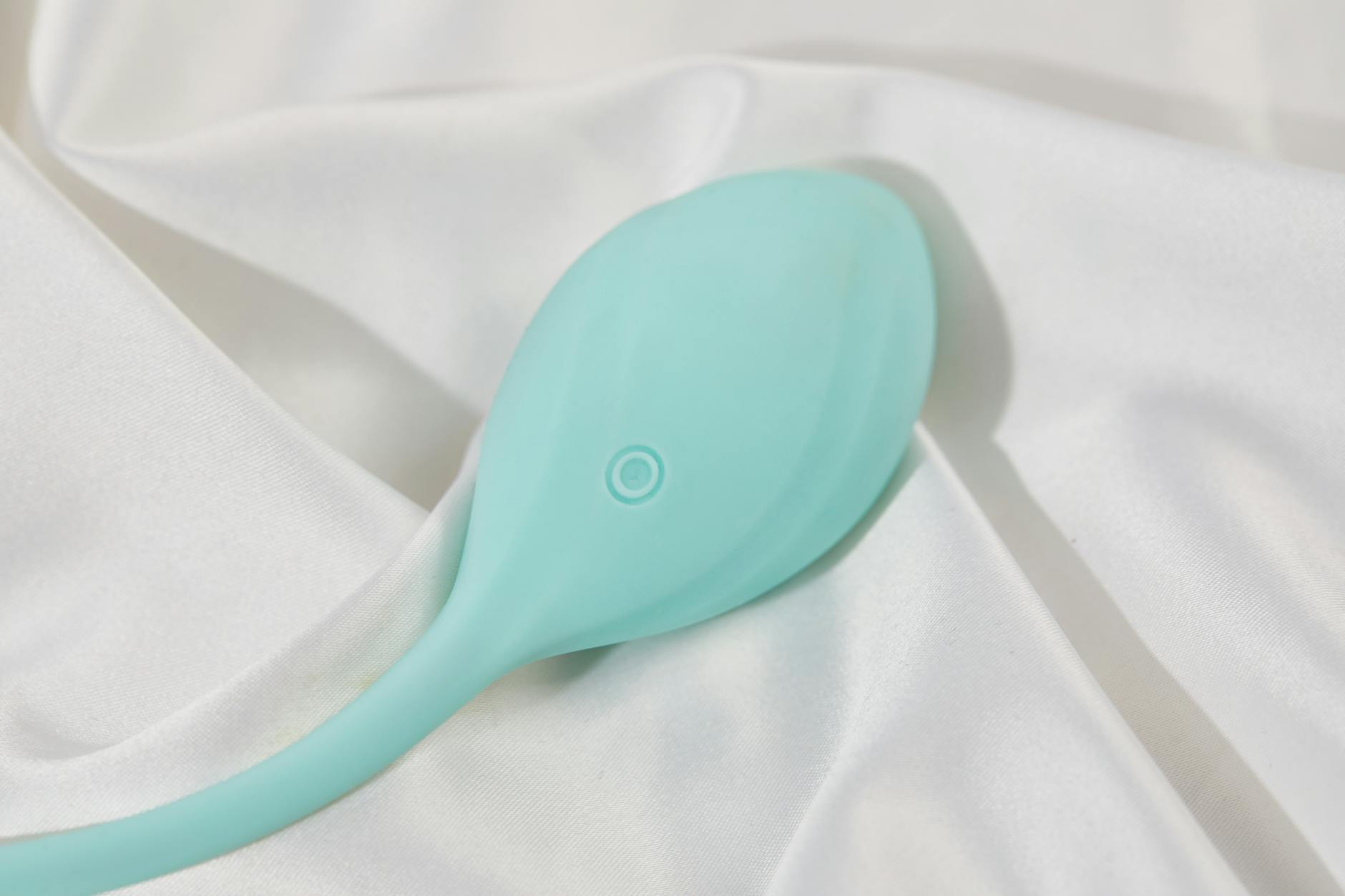
How to Use Lemon Vibrators With Hormonal Birth Control Shifts
Your pill, patch, or IUD changes how your body responds to touch. Here's what actually shifts, and how to recalibrate your technique with a lemon clitoral vibrator.
Your contraception affects your pleasure. Not because it's broken or because you're doing something wrong, but because hormonal birth control is literally rewiring how your nervous system responds to touch. If you've recently switched pills, gone back on the patch, or added an IUD, your lemon vibrator technique probably needs a small recalibration.
Most people don't talk about this. Your gynecologist might mention mood shifts or spotting. Nobody mentions that your orgasm threshold just got higher, or that the warm-up time you needed last month no longer applies.
Hormonal contraceptives (the pill, patch, ring, or hormonal IUD) suppress your natural cycle by maintaining steady, elevated levels of synthetic hormones. This is the whole point of why they work. But it also means your body never experiences the natural peaks and valleys that typically drive arousal timing.
Here's what shifts in your nervous system and tissues:
Clitoral sensitivity timing becomes flat. Without the monthly surge in estrogen that builds around ovulation, your clitoris isn't getting the same "peak sensation" window you might remember. Some people actually find this freeing. Others notice they need more direct stimulus to feel the same intensity. With a lemon vibrator, this often means starting at a slightly higher intensity setting than you used off-pill.
Blood flow to genital tissue steadies out. Off hormonal birth control, blood flow to your vulva increases during your fertile window. On birth control, it stays consistent year-round. Less dynamic blood flow can mean slightly slower arousal buildup, but also more predictable sensation. You know what to expect, which is its own kind of freedom.
Lubrication patterns change. The pill doesn't dry you out completely (that's a myth), but it often reduces peak cervical fluid production. You might find water-based lube becomes your default rather than an occasional addition. And honestly, that's fine. It means your lemon clitoral vibrator works better with a little reinforcement.
Pelvic floor tension shifts. Hormonal birth control often increases baseline pelvic floor muscle tone. You might notice you're "gripping" more without trying. This can actually delay orgasm or make it feel trapped. One of the best adjustments is learning to consciously relax your pelvic floor before using your lem vibrator, not during.
Not all hormonal birth control affects sensation equally. Understanding your specific method helps you anticipate how your lemon adult toy will feel.
The combined pill (estrogen + progestin). This is the standard birth control that most people use. Because it maintains steady hormone levels, you get predictable sensitivity. Your lemon vibrator settings should remain stable week to week. One unexpected benefit: many people report clearer skin and less hormonal migraine. The trade-off is often slightly muted orgasm intensity for the first few months while your body adjusts.
The progestin-only pill (the mini-pill). This maintains even less hormonal fluctuation than the combined pill. Some people find they need a slightly longer warm-up window and might benefit from starting at setting 2 on a lemon vibrator instead of setting 1. Others notice no change. This is genuinely individual.
The hormonal IUD (Mirena, Kyleena, Skyla). These release hormones directly into your uterus and bloodstream. They often create the most stable hormonal baseline and sometimes the most flattened arousal curve. If you're adjusting to a hormonal IUD, expect to give yourself 6-8 weeks before you assume anything about your new baseline. Many people find that the lemon suction technology works better with an IUD than traditional vibrators because it doesn't require the same sustained friction.
The patch or ring. Both deliver steady-state hormones but with weekly or monthly resets. Some people notice a slight micro-cycle in sensitivity at changeover time. Nothing dramatic, but worth tracking.
When you start or switch hormonal birth control, here's the practical framework for using your lemon clitoral vibrator:
Week 1-2: Observation only. Don't try to orgasm yet. Use your lem vibrator for 5-10 minutes at your previous "standard" setting. Just notice what feels familiar and what feels different. Your goal is data, not climax.
Week 3-4: Intensity recalibration. If you noticed less sensation, try bumping up one setting level. If things felt about the same, stick with your usual. Give it 4-5 sessions before deciding if the change is real. Sensation after birth control adjustment takes a few attempts to stabilize.
Week 5+: Warm-up timing. If you're taking longer to build arousal, adjust your warm-up window. Instead of jumping straight to your lemon vibrator, spend 10-15 minutes on non-device touch first. This isn't about the toy being less effective. It's about your body needing a different ramp.
Pelvic floor reset. Before each session with your lemon adult toy, try this: take a full breath in, then on the exhale, consciously relax your pelvic floor for 3-5 seconds. Let your muscles soften. Then start your vibrator. This single adjustment often eliminates the "gripping" sensation that hormonal birth control can create.
Here's what you should expect in the first 4-6 weeks after starting or changing hormonal contraception:
Mild numbness or reduced sensation is normal. You're not broken. Your nervous system is adjusting to new hormone levels. Give it time.
A slight increase in warm-up time is normal. You might need 20 minutes instead of 10. That's okay.
Fluctuating sensitivity day to day is normal. One day your settings feel perfect. The next day you want something different. This will stabilize.
What's NOT normal: pain during or after using your lemon vibrator, complete loss of arousal that doesn't improve after 6 weeks, or vaginal spotting during use (that suggests tissue irritation). If any of these happen, check in with your gynecologist. Most often there's a simple fix. Sometimes it means a different contraceptive is a better match for your body.
If you're in a relationship, this shift affects both of you. Here's what to say instead of saying nothing:
"I'm adjusting to new birth control. My body is responding differently to touch right now. We might need to extend foreplay." That's it. Clarity beats silence every time. Your partner doesn't need to feel rejected. You just need them to understand the timeline.
If you're using your lemon clitoral vibrator solo or partnered, the same rule applies. Let your partner know that you might need different intensity settings or different timing. Frame it as a recalibration, not a problem.
If sensation loss continues beyond 8-10 weeks, or if it feels dramatic (like you've gone from very responsive to basically numb), loop in your provider. They can check whether:
Your current contraceptive is the right hormonal dose for you
You might benefit from a different type (switching from pill to ring, for example)
There are any underlying vascular or neurological factors worth investigating
Sometimes a simple dose adjustment fixes the issue. Sometimes switching methods does. You're allowed to want pleasure AND reliable contraception. Those aren't opposed demands.
Here's something worth noting: the suction-based technology of a lemon vibrator often adapts better to hormonal changes than traditional vibration. Because suction creates stimulation through gentle pressure changes rather than rapid oscillation, it can feel just right even when your baseline sensitivity is in flux.
Many people switching contraception find that the lemon adult toy settings they liked before still work. They just might need to spend an extra minute at a lower setting first. That's a much easier adjustment than switching toys entirely.
If you don't have a lemon clitoral vibrator yet and you're about to start birth control, this is actually a good time to invest. You're already navigating one change. Having a toy that adapts well to hormonal shifts means you're not troubleshooting two variables at once.
Your birth control is solving a real problem. It's preventing pregnancy, maybe helping your skin, maybe reducing your period. The fact that it also changes how your body responds to touch is a side effect worth talking about, not a reason to feel broken or to silently struggle.
Most birth control adjustment takes 3-6 months for full stabilization. Your pleasure patterns might shift a few times in that window. That's not a sign that something is wrong. It's just biology doing its thing. With a lemon vibrator, you have a tool that you can adjust alongside your body. Use it. Track what changes. Talk about it with your partner if you have one. And give yourself permission to need something different than you needed six weeks ago.
No. The combined pill and hormonal IUDs tend to create the most noticeable shifts because they maintain the steadiest hormone levels. The progestin-only pill usually has a lighter touch. Barrier methods and copper IUDs don't affect your hormonal cycle at all, so pleasure patterns stay tied to your natural rhythm. Everyone is also different. Some people notice zero difference between being on and off hormonal birth control. Others find significant shifts. Tracking your own response is more useful than generalizing.
Most people see stabilization between 4-8 weeks. Your nervous system is learning new baseline hormone levels. By week 6, you should have a clearer sense of your new "normal" sensation. If things still feel off at 10-12 weeks, that's worth discussing with your doctor. Sometimes a different dose or method is a better fit.
Not at all. Keep using it. You're gathering data about how your body responds. Use it the same way, at the same settings, and track what feels different. That information helps you understand your adjustment and helps your doctor troubleshoot if needed. Plus, pleasure doesn't stop because your hormones are shifting. You deserve it during the adjustment period too.
Yes, for some people, especially in the first few weeks. This usually improves as your body adjusts. If you find orgasm is genuinely harder with a lemon vibrator after the adjustment period, you might need a different intensity setting, a longer warm-up, or pelvic floor relaxation work. It's almost never that the toy stopped working. It's that your body needs slightly different input.
Yes. That's one of the most common adjustments people report. Start at your previous setting, and if it feels like something's missing, move up one level. You're not becoming numb or broken. Your baseline sensitivity has shifted slightly. The lemon vibrator is still doing exactly what it did before. You're just meeting it at a different point.
Take a breath. This is almost never permanent. Give the new method 6-8 weeks before deciding it's a deal-breaker. In that time, adjust your lemon clitoral vibrator settings, extend your warm-up, try pelvic floor relaxation, and maybe add a little extra lube. Most people find their groove in that window. If you're still struggling after 8 weeks, a conversation with your gynecologist about switching methods is completely valid. There are a lot of options, and finding one that works with your body's pleasure response matters.
Your birth control and your pleasure are not separate conversations. They're connected, and that's okay. Track how your lemon vibrator feels over the next few weeks. Notice what settings work. Give yourself grace during the adjustment period. And if you have questions about how your specific contraception might affect your response, your gynecologist is there to answer them.
Your sensitivity changes don't define your sexuality. They're just information. And with that information, you can recalibrate and keep feeling good.