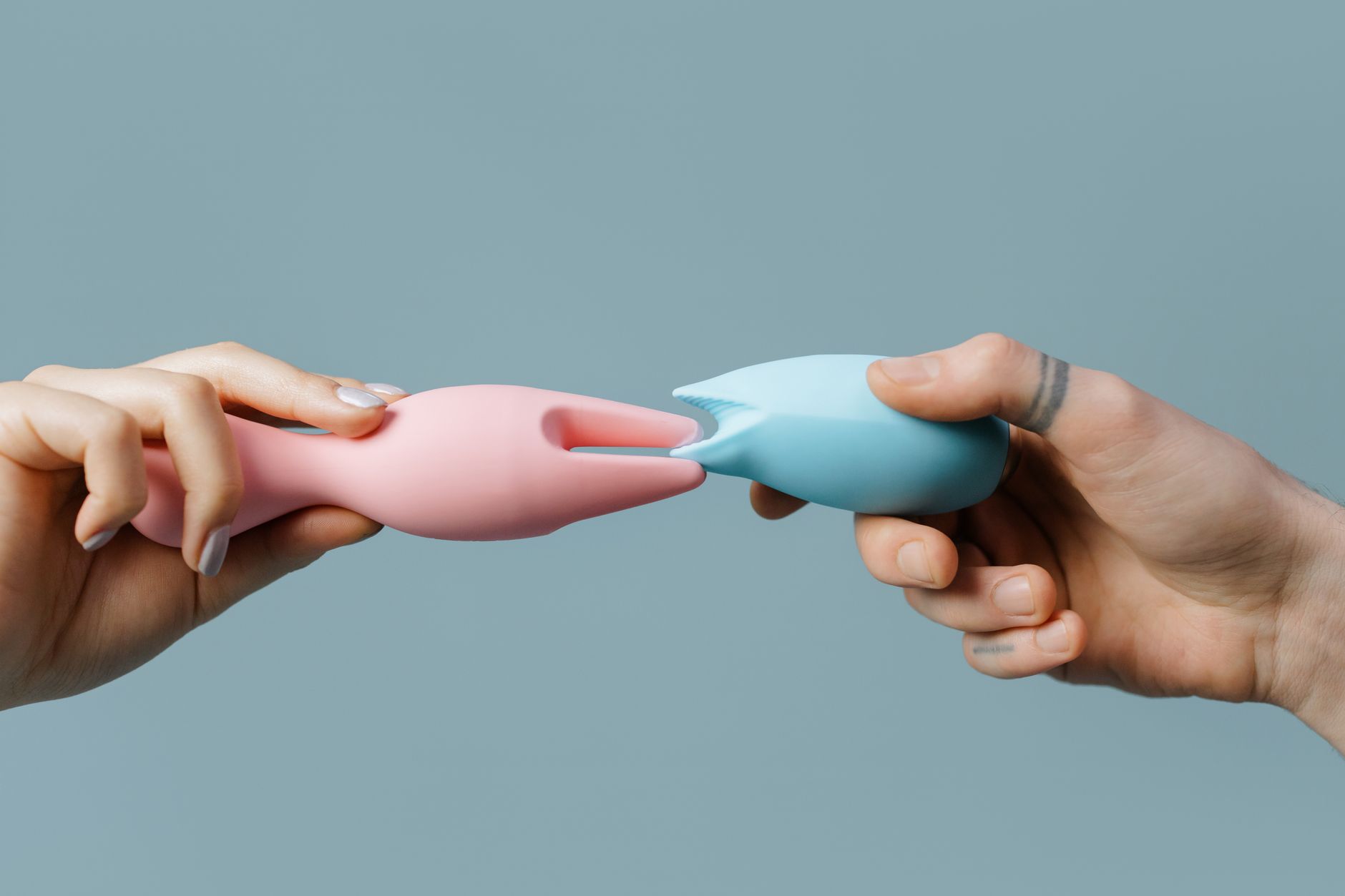
Let's be real about reconnection
Time apart doesn't kill attraction. But it does create friction. Whether you've been dealing with work travel, family caregiving, health issues, or just the slow drift that happens in any long-term relationship, the gap between "we were close" and "we're close again" can feel impossibly wide. Your body feels like a stranger's. Your partner's touch is familiar but unfamiliar at once. The pressure to instantly reignite desire is its own kind of distance maker.
This is where lemon vibrators actually solve a real problem. Not because they're magic, but because they reset the conversation. Instead of "we need to have sex," it becomes "let's explore together." Instead of performance pressure, it becomes play. And that shift in tone changes everything.
Why reconnection stalls (and it's not what you think)
Here's what I see in couples work: the first reconnection attempt fails not because desire is gone, but because the pace is all wrong. One partner wants to jump back to exactly how things were. The other feels watched, evaluated, expected to perform. Somewhere in that collision, someone shuts down.
The second thing that stalls reconnection is shame. You might feel self-conscious about how your body has changed. Your partner might feel rejected if touch was off the table for a while. You both might be carrying unspoken resentment about the time apart, and resentment is kryptonite for arousal.
Lemon vibrators disrupt this pattern because they introduce novelty without introducing threat. If you've always done things one way, a new tool is permission to do them differently. It's also a concrete sign that reconnection is intentional. You're not just drifting back. You're choosing it.
The setup conversation (do this first)
Before you introduce any lemon sexual toy, talk. Not in bed. Not in a crisis moment. Over coffee, or a walk, or whenever you can be honest without pressure.
Say something like: "I miss us physically, and I'm nervous about finding our way back. I found something that might help us rebuild at our own pace." That's it. You're naming three truths: you want intimacy, you're being honest about the awkwardness, and you have a plan.
Then listen. Your partner might have their own anxieties about reconnection. They might worry about rejection, or feel self-conscious, or assume you've lost interest. These conversations are the real intimacy work. The lemon clitoral vibrator is just the stage.
If your partner seems resistant, don't push. Instead, ask: "What would feel right to you for rebuilding this part of us?" Maybe they want to go slower. Maybe they want more non-sexual touch first. Listen to that. A lemon vibrator isn't a workaround for real conversation. It's a tool for people who've had the conversation and want to move forward.
How to actually use lemon vibrators when reconnecting
Start with solo exploration first, separately. Spend a few days (or a week) using a lemon vibrator on your own to remember what your body likes. This sounds weird, but it's crucial. If you've been disconnected from pleasure for months, jumping straight to partnered use can feel like too much. Solo use is the warm-up. It reminds you what arousal feels like, what rhythm works for you, what intensity you actually want. Then you bring that knowledge into the partnership.
When you do come together, start low-pressure. One option: lie next to each other (no one's watching), and each use a lemon vibrator solo while your partner is present. This removes performance pressure entirely. You're not doing it for them. You're doing it alongside them. Over time, this can evolve into using it together. But the first iteration is just: we're both allowed to feel good, in the same space, with zero obligation beyond that.
Another approach: use a lemon clitoral vibrator as part of foreplay, not the main event. Have your partner bring you to the edge with the toy, then pause. Build in moments of just touching each other. The vibrator isn't replacing intimacy. It's a tool within intimacy. This rhythm (vibrator, pause, touch, repeat) actually rebuilds the slow-building arousal that often gets lost in reconnection attempts.
Start on the lowest setting. After time apart, sensation can feel too intense. You might be physically tender in ways you don't expect. Lower intensity, longer warm-up, more breaks. This is not deprivation. This is actually how the body reconnects. You're not rushing back to where you were. You're building something new.
The emotional piece (honestly, it's the bigger piece)
When you're using a lemon vibrator together after time apart, you might feel emotional. You might cry, or feel weird, or feel suddenly tender about the person next to you. This is normal. You're reactivating a part of your body that's been dormant. That comes with feelings.
Let those feelings exist. Don't try to sexy them away. If your partner says "I'm feeling kind of emotional," the response is not "let's keep going." It's "let's pause and just be together." Then, when the moment passes, you come back to it. Reconnection isn't linear. It's messy and non-linear, and that's exactly right.
One thing I notice: couples who successfully rebuild intimacy after time apart are the ones who laugh. If using a lemon vibrator feels awkward, say so. "This is weirdly nerve-wracking." Laugh about it. Your partner will likely laugh too. That shared nervous laughter is actually the intimacy you're rebuilding. You're saying: this matters to me, I'm showing up anyway, and I trust you to see me try.
What to expect (and what not to expect)
First reconnection sessions don't usually end in spectacular orgasms. You might not climax at all. You might feel aroused for five minutes then tired. You might feel more connected to your partner and also more aware of how much physical intimacy you've been missing. All of this is fine. You're not scoring the reconnection. You're just showing up and staying curious.
Second and third sessions usually feel less weird. Your body remembers. The pressure lightens. By the fourth or fifth time, you might actually feel something close to your old rhythm, but also different. Better sometimes, because you're both more aware and intentional.
If after a few weeks reconnection still feels off, that's worth checking in about. Sometimes reconnection stalls because there's a real relationship issue that needs addressing. A lemon vibrator can help you rebuild touch, but it can't fix resentment or broken trust. If those are present, go back to talking first.
When to reach out for support
If reconnection attempts create conflict, or if one partner wants to reconnect and the other consistently pulls away, that's a sign to talk with a therapist who specializes in couples work. There's usually something underneath the surface. Sometimes it's about the time apart. Sometimes it's about the relationship itself. Either way, you deserve support untangling it.
Reconnection after time apart is one of the most common transitions I work with in my practice. It's also one of the most hopeful. Because the fact that you both want to rebuild is already the hardest part. The lemon clitoral vibrator is just the practical tool that lets you do it without performance pressure. Everything else is just showing up and being honest with each other.
People also ask
How long does it take to feel reconnected physically after time apart?
This varies wildly, and there's no standard timeline. Some couples feel close again within a few weeks. Others take three months. The speed usually depends on whether the time apart was chosen (a work project) or involuntary (a health issue), and whether there's residual resentment underneath. What matters is consistency, not speed. Reconnecting once every two weeks won't work. But reconnecting once a week, even for 15 minutes, creates momentum. The lemon suction toys are great for this because they make it feel intentional and special, not obligatory.
Is it weird to use a vibrator together if we've never used one before?
It can feel weird for about 30 seconds. Then your nervous system realizes nothing bad is happening, and the weirdness usually passes. The couple who feels most nervous beforehand often feels most relieved afterward. It's permission. Permission to want pleasure, to be playful, to not pretend you're still the same people you were before the time apart. If the weirdness doesn't pass, that's info worth exploring in conversation. Sometimes reluctance signals something real that needs addressing.
Can lemon vibrators help if our reconnection feels emotionally fragile?
Absolutely, but with care. Emotional fragility usually means there's hurt underneath the physical distance. A lemon clitoral vibrator can help you rebuild the touch part. But it works best when you're also having real conversations about what created the distance and what you both need moving forward. Use the vibrator as part of your reconnection toolkit, not the only tool. The bigger toolkit includes talking, non-sexual touch, time together without distractions, and sometimes professional support.
What if my partner feels threatened by using a toy?
This is more common than you'd think, and it's worth taking seriously. Your partner might feel like they're being replaced, or that you need the toy because they're not enough, or that introducing it means there's a bigger problem. Have a direct conversation: "This isn't about you not being enough. It's about us rebuilding together without pressure. I want to explore this with you, not instead of you." Then listen to what they're actually scared of. Sometimes reassurance is enough. Sometimes it needs time. And sometimes you need a couples therapist to help you both move past it.
How do you introduce a lemon vibrator if reconnection hasn't started yet?
Don't lead with the toy. Lead with the conversation. "I've been thinking about us, and I want us to reconnect. I found something that might help lower the pressure while we rebuild." Your partner needs to understand the intention first. The tool comes second. If they say no, that's info too. You might need to start with just more non-sexual touch, or time together, before any tools make sense. The vibrator is for couples who want to move forward and are looking for a gentler way to do it.
Can lemon vibrators work if we're in couples therapy about reconnection?
Yes, with permission. If you're in therapy working on reconnection, bring it up with your therapist first. They might have insights about whether now is the right time, or they might suggest starting with other tools. But many couples therapists actually recommend lemon vibrators or similar toys because they introduce novelty, lower performance pressure, and give permission to want pleasure again. Just check in with your therapist rather than assuming.
Moving forward
Reconnecting after time apart is one of the most vulnerable things a couple can do. You're admitting that you want each other again. You're showing up when it would be easier to drift. That takes courage, and it deserves gentleness.
A lemon clitoral vibrator is a practical tool that makes reconnection less about performance and more about presence. But the real work is the conversation, the consistency, and the willingness to be awkward together. If you bring those three things, the rest usually follows. Your body remembers how to want. Your partner remembers too. Sometimes you just need permission to start.
If you're ready to reconnect and want support navigating the practical side of rebuilding intimacy, reach out. We have resources and guides designed specifically for couples navigating this transition. You don't have to figure this out alone.