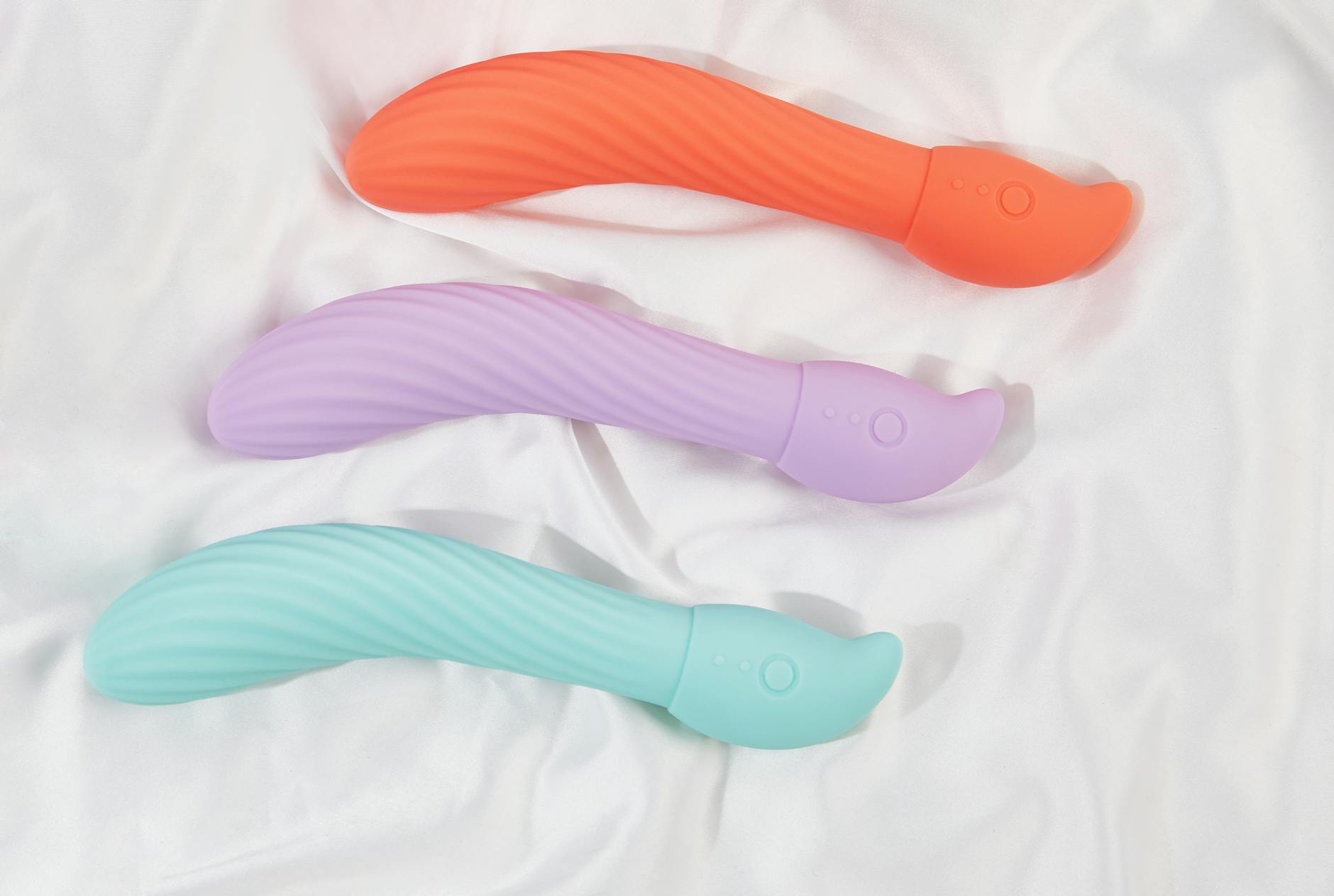
Why people switch to lemon vibrators (and what actually changes)
You've spent months or years figuring out what works with your traditional vibrator. The pressure is right, the pattern hits, the rhythm carries you there. So why mess with it?
Honestly, most people don't switch unless something shifts. Maybe your go-to toy stops working. Maybe you got curious after hearing someone swear by the lemon suction technology. Maybe what used to deliver is starting to feel just a bit predictable. Whatever the reason, the jump to a lemon clitoral vibrator can feel like starting over. It's not. It's an upgrade.
The core difference between a traditional vibrator and a lemon vibrator is the stimulation method. A conventional vibrator uses rapid back-and-forth or circular motion. A lemon clitoral vibrator uses gentle suction and pulsation, which feels nothing like friction. For many people, it's the difference between tapping a surface and creating a small, consistent pressure wave. Both get you there. They just feel completely different on the way.
Understanding suction stimulation if you've only known vibration
Let's get specific about what suction actually is, because "suction vibrator" can sound like marketing nonsense if you've never tried it.
When you use a lemon vibrator, the sensation isn't coming from something moving against your skin. Instead, the toy creates a gentle vacuum over the clitoris. That vacuum pulses at different intensities and rhythms. It's less aggressive than traditional vibration, but oddly more intense in a different way. The stimulation feels deeper, more concentrated. Some people describe it as a gentle pulling sensation rather than a buzzing one.
This matters because it changes what preparation you need. With traditional vibrators, you're often ready to go once you're aroused. With lemon vibrators, especially the suction-based ones, you might need a bit more time to warm up. Your body has to adjust to the different sensation. That's not a flaw. It's just different.
Many people who switch find that the lemon clitoral vibrator is actually easier on sensitive tissue. If you've been using a traditional vibrator and noticed irritation, numbness, or that you need increasingly higher intensity to finish, a lemon vibrator might reset that sensitivity.
The practical steps for trying a lemon vibrator for the first time
Start with low intensity and patience.
Your instinct will be to ramp it up to what you're used to with traditional toys. Resist that. A lemon vibrator at intensity 3 out of 10 is doing more than you think. Give yourself five minutes at low intensity before you consider turning it up. Your nerve endings need to recognize what's happening.
Use plenty of lubrication.
Suction works better when there's a proper seal, and lubrication helps that. A water-based lube is your friend here. Apply it generously, then apply a bit more. It seems excessive until you're in the moment and realize you nailed the comfort level.
Don't chase the sensation you know.
Here's the biggest mistake people make: they expect a lemon vibrator to feel like their old toy, just slightly different. It won't. It'll feel like something else entirely. That's the point. If you keep waiting for the familiar buzz, you'll miss the new thing that might actually be better. Give it three or four sessions before you judge it.
Try it in a relaxed setting first.
No pressure. No partner. No agenda. Just you, the toy, ten minutes, and curiosity. Your brain needs to learn this new sensation without performance anxiety layered on top. Once you're comfortable solo, the transition to partnered use is much easier.
Common friction points when switching (and how to solve them)
"It doesn't feel as intense as my old vibrator."
Intensity in a lemon vibrator isn't measured the same way. A traditional vibrator at 8 out of 10 is loud, fast, and blunt. A lemon vibrator at 8 out of 10 is a steady, concentrated vacuum. They're not comparable. What matters is whether you can finish. If you can, the intensity is sufficient. Give your nervous system two weeks to recalibrate before you decide it's not working.
"My clitoris is sensitive to suction."
Some people's bodies just don't vibe with suction, and that's fine. Not everyone needs to switch. But if you want to try anyway, the softness of the contact matters hugely. Make sure the silicone rim is soft and pliable, not rigid. A quality lemon clitoral vibrator from a brand like Hello Nancy is designed specifically to be gentle on delicate tissue. Budget extra lube. Start at intensity 1 or 2. Consider using the toy over your labia rather than directly on the clitoris for the first session.
"I'm used to a specific pattern and the lemon vibrator doesn't have it."
There's a learning curve with new patterns. You might not reach climax with the exact rhythm your brain learned to recognize. That's temporary. Within a few uses, your body will find a new favorite. Some people discover that the patterns on a lemon vibrator actually feel more natural than the ones they were using before, once they let go of muscle memory.
What to expect in your first week of use
Session one: novelty. It'll feel weird. Your brain is processing something new. You probably won't finish, and that's totally normal.
Session two or three: resistance. You might feel frustrated because it's not doing what you expect. This is the moment most people quit. Don't. You're in the adjustment phase.
Session four through seven: the shift. Something clicks. The sensation starts to feel good instead of strange. You might not finish every time, but you're getting closer. Your body is learning.
Week two onward: integration. You know what this toy does. You know how to position it. You know what intensity works. You're ready to use it however you want.
This timeline isn't universal. Some people get there in three sessions. Some take two weeks. Neither is wrong. Your nervous system is rewiring what pleasure feels like, and that takes time.
Bringing a partner into the transition
If you have a partner, you have a choice: experiment solo first, then introduce them to the new toy, or explore it together from the start. I recommend solo first, especially if you're uncertain. Here's why: if you're learning the toy and worrying about your partner's reaction simultaneously, you're dividing your attention. That makes adjustment harder.
Once you're comfortable, tell them what to expect. "I'm trying a different kind of toy. It uses suction instead of vibration. It'll feel different, and I might not finish the same way I used to. That's not about you. It's just a learning curve." That framing prevents them from taking any slowness or change personally.
If you're using it during partnered sex, positioning matters more with a lemon vibrator than with a traditional one. The seal needs to be maintained. Your partner can help you find the right angle, but the toy should stay pretty still rather than moving around. That's different from how you might have used your old vibrator, so it's worth discussing beforehand. Most couples find the shift pretty straightforward once they understand the mechanics.
When to give up and when to persist
There's a real difference between "this is uncomfortable" and "this is unfamiliar."
Uncomfortable means pain, excessive irritation, or genuine physical distress. Stop immediately. A lemon vibrator might just not be for your body, and that's fine.
Unfamiliar means it feels weird, different, or less intense than you expected. That's the adjustment phase, and it usually resolves with patience and repetition.
Give yourself at least seven solid attempts before you decide a lemon vibrator isn't for you. By attempt seven, you'll know whether this tool genuinely doesn't work or whether you just needed time to adapt. There's a difference.
The upside of switching (what waits on the other side)
Most people who make the transition and stick with it report that they reach climax faster, the sensation feels more targeted, and their clitoris feels less numb over time. Some discover they can have multiple orgasms more easily with lemon vibrators than they ever could with traditional ones. A few report that orgasms feel deeper or differently pleasurable.
None of that is guaranteed. But the fact that these outcomes are common enough to be predictable suggests that the switch is worth the adjustment period.
Your pleasure matters. That's not inspirational talk. That's the practical foundation of this. If your current setup works perfectly, keep it. If there's friction anywhere in your experience, a lemon clitoral vibrator might be the reset your nervous system needs.
People Also Ask
How long does it take to adjust to a lemon vibrator?
Most people feel genuinely comfortable with a lemon vibrator within one to two weeks of regular use. That said, comfort and climax are different milestones. You might feel comfortable with the sensation before you finish consistently. If you're not orgasming within two weeks, you probably won't, and that's a sign a lemon vibrator might not be your tool.
Can I use my traditional vibrator and a lemon vibrator interchangeably?
Absolutely. Many people keep both. They use whichever feels right in the moment. This isn't a replacement situation. It's an addition. Having options is never a bad thing.
Do lemon vibrators work for everyone?
No. Some people's nervous systems prefer vibration over suction. That's fine. The gold standard is the tool that gets you there, whatever that is. If a lemon vibrator doesn't work after a genuine two-week trial, you have your answer, and you can move on without guilt.
What if I have a very high pain threshold and suction feels too gentle?
Start at the highest intensity setting and give it the same two-week trial. If it's still not enough after that, lemon vibrators might not be your match. Some bodies genuinely need the intensity of traditional vibration, and that's not a flaw. It's just neurology.
Are lemon vibrators quieter than traditional vibrators?
Yes, significantly. The suction mechanism is much quieter than the motor in a traditional vibrator. If noise was ever an issue, this is one of the biggest advantages of switching.
How do I know if I'm using the lemon vibrator correctly?
If there's a seal between the toy and your body, and you're not in pain, you're using it correctly. The specific angle or pressure is less critical than with traditional vibrators. Play around with it. Find what feels good. There's no single right way.
Making the switch is worth the awkward middle part
Any transition to a new tool carries a discomfort period. That discomfort is not a sign of failure. It's just the cost of learning something new. The payoff is on the other side: a tool that might actually work better for your body than what you've been using.
Your pleasure deserves that investment. If you're curious about lemon vibrators, try one. Give it real time. See what happens. The worst case is you learn that traditional vibrators are your preference, and you have that information with certainty. The best case is you unlock a new dimension of pleasure you didn't know was possible.
Either way, you win.