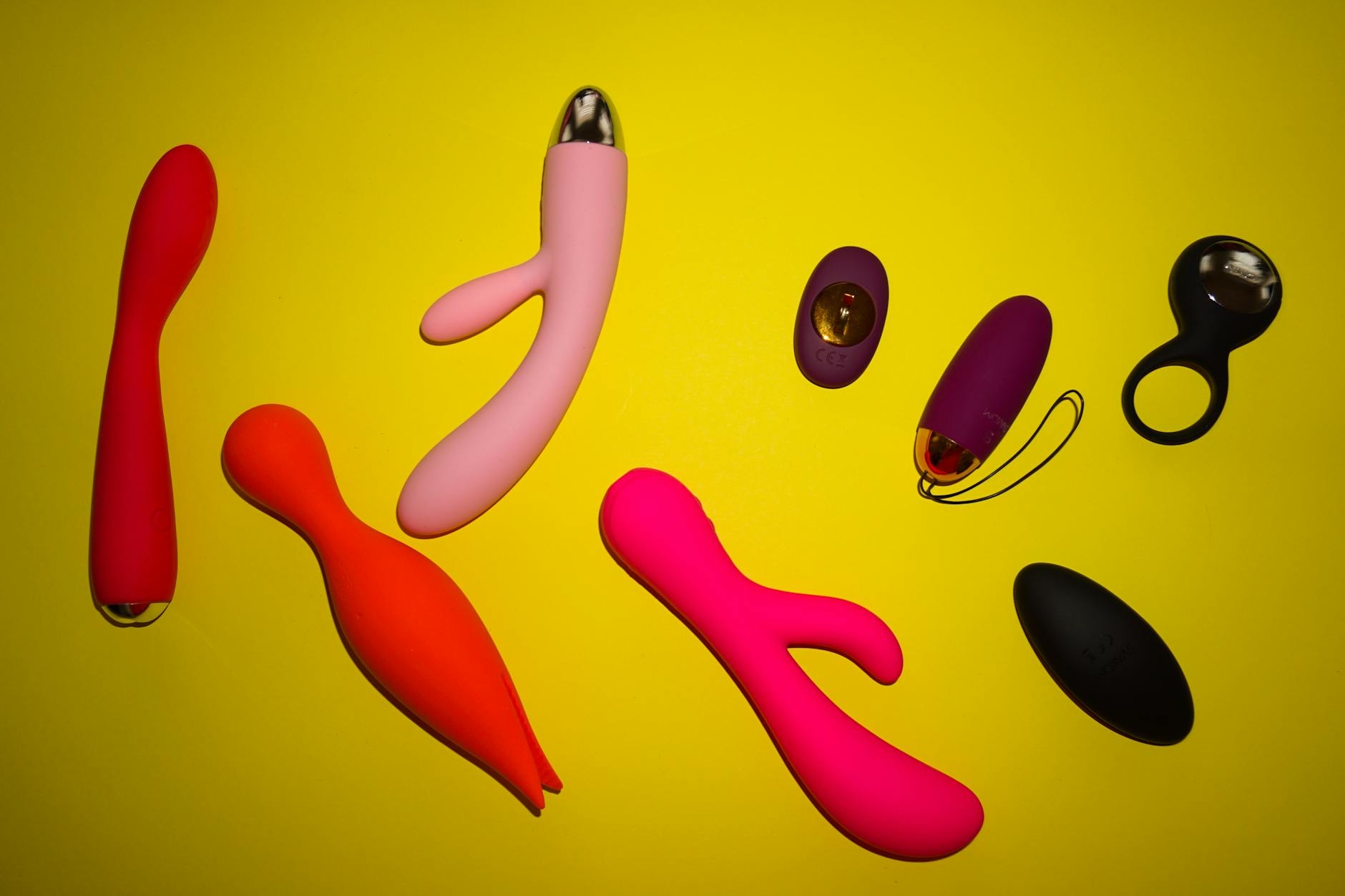
How to Recover Sensation in Your Clitoris After Long-Term Vibrator Use
If your lemon vibrator or other clitoral vibrator feels less intense than it used to, your nerves aren't broken. Here's what's happening and how to get that spark back.
You've been using your lemon clitoral vibrator regularly for months or years. At first, sensation was electric. Now? It feels like you're chasing something that used to come easily. You're not broken. Your vibrator isn't broken either. What's happening is called sensory adaptation, and it's completely normal, completely temporary, and completely fixable.
I've worked with hundreds of people navigating this exact frustration. The silence around it is strange, because it's one of the most common long-term vibrator questions I hear. Let's talk about what's actually going on in your nervous system and what actually works to reset it.
Your nervous system is brilliant at ignoring things it encounters repeatedly. Touch a wool sweater and after five minutes you stop feeling it against your skin. Sit in a room with white noise and your brain stops processing it. This is adaptation. Your sensory nerves fire less vigorously when exposed to constant or frequent stimulation.
With clitoral vibration, the process is slightly different but follows the same principle. When you use a vibrator, especially at high intensity, your nerve receptors in the clitoris become less responsive to that specific pattern of stimulation. The nerves are still there. The sensation capacity is still there. The nervous system has just learned to filter this input as "background noise."
This doesn't mean you've damaged yourself or desensitized permanently. It means your system has adapted. And adapted systems can re-adapt.
Frequency matters, but so does individual neurology. Some people experience noticeable adaptation after two months of daily use. Others can use their lemon vibrator daily for two years and never notice a shift. The variables:
Intensity and duration. High-setting, 20-minute sessions create stronger adaptation faster than moderate intensity for 10 minutes. Your nerve system adapts to intense stimulation more quickly because there's a steeper signal difference to adapt away.
Baseline sensitivity. People with naturally lower clitoral sensitivity tend to seek higher intensity, which accelerates adaptation. People with higher baseline sensitivity often use lower settings and experience slower adaptation.
Variety. Using the same vibration pattern, intensity, and positioning every time speeds adaptation. Changing patterns and settings creates novelty your nervous system can't habituate to as easily.
Individual nervous system traits. Some people's sensory systems are inherently more plastic (responsive to change and adaptation). This isn't good or bad. It just means if you have this trait, you may need to be more intentional about preventing habituation.
Here's what clinical data and patient experience support. This isn't speculation. This is what brings sensation back.
The break: 2-4 weeks of zero vibration. This is non-negotiable. You need to let your nerve receptors fully stop filtering out the sensation of vibration as background noise. Two weeks is the minimum. Four weeks is more reliable. During this time, other forms of touch are fine. Fingers, hands, partner touch, manual stimulation. Just nothing vibrating.
I know. It feels like deprivation when you're used to the intensity. The paradox is that the break is what gives you the intensity back.
Reintroduction: Start at low-medium intensity. When you come back to your lemon vibrator, begin at patterns 1-3, whatever your device calls the lower settings. Spend 5-10 minutes at this intensity. Your receptors are fresh. You'll feel things you'd stopped noticing.
Pattern rotation: Never use the same setting twice in a row. If you use pattern 2 one day, use pattern 4 or 5 the next session (if you're using a lemon clitoral vibrator or similar multi-pattern device). If you use a simpler vibrator, vary the positioning or angle instead. This prevents your nervous system from settling into habituation again.
Weekly intensity creep, not daily. Don't go back to your old intensity routine immediately. Build intensity slowly over three weeks. Use low-medium the first week, medium the second, and graduate to higher intensities only in week three if needed.
During those 2-4 weeks without vibration, your sensory nerve endings gradually stop filtering out vibration as a "constant" stimulus. Your nervous system resets its baseline. The neural pathways associated with vibration stimulation become responsive again instead of suppressed.
This isn't like taking a tolerance break from alcohol or caffeine, where your body is physically adjusting chemical receptors. This is pure neurological adaptation reversal. Your nerve fibers themselves are intact. Their responsiveness is just being restored.
Want evidence? A 2019 study in the Journal of Sexual Medicine found that people who took 3-4 week breaks from vibrator use reported significant increases in sensation sensitivity upon resuming use, compared to those who continued daily without breaks.
Assuming you need a more intense vibrator. Wrong. If you're experiencing adaptation, a more powerful lemon sucker or vibrator will just accelerate the problem. The issue isn't your device. It's the adaptation itself.
Trying to power through with higher settings. This deepens adaptation. You're essentially asking your nervous system to adapt harder and faster.
Breaking for a week instead of 2-4. One week rarely reverses adaptation. You get a small sensitivity boost, then adaptation sets back in. Commit to the full timeline.
Coming back at your old intensity immediately. This defeats the purpose of the break. You're teaching your system to adapt all over again.
Once you've reset, here's how to stay in that responsive zone without needing another break for years.
Never use the same intensity two days in a row. Alternate. Low one day, medium the next, high the third, then back to medium. This pattern prevents your system from settling.
Set a monthly intensity reset. One week per month, use only low-medium settings. This gentle reset keeps your baseline responsive without requiring a full break.
Vary patterns obsessively. If your lemon vibrator has five patterns, rotate through all five. If you're using a simpler device, change the angle, change where on your clitoris you're applying pressure, change your positioning. Your nervous system habituates to patterns as much as to intensity.
Build breaks into your calendar. Even if you're not experiencing adaptation, taking one week off every 4-6 months keeps your sensory responsiveness fresh. Think of it like active recovery in fitness.
Let's be clear about the difference. Adaptation is normal. Decreased sensation after a break of zero vibration in three months? Normal. Needing slightly higher intensity as you age? Normal.
Actual problems warrant a conversation with a healthcare provider: pain during or after use, numbness that doesn't improve with breaks, sudden loss of sensation in other areas, or any change that came on suddenly alongside other symptoms.
Adaptation is gradual and reversible. Medical issues are not.
If you're using a lemon clitoral vibrator or other adult toy with a partner, the adaptation reset can feel awkward to explain. Here's the script: "My nervous system has adapted to the vibration pattern. Taking a break will reset my sensitivity. This is totally normal and completely fixable. During the break, I'm open to other kinds of touch." That's it. Partners usually get it immediately once it's framed as biology, not rejection.
When you come back from a proper break, sensation often feels heightened. Lower intensities that felt ineffective before now feel noticeable. Patterns you'd stopped enjoying feel fresh again. This usually lasts about three weeks, then plateaus as your system recalibrates. That's when the rotation strategy kicks in to maintain it.
Many people report their most intense orgasms during the first week back after a reset. Your nervous system is essentially waking up. Don't waste that window. Use it. Enjoy it. Then maintain it with the strategies above.
Sensation isn't just about intensity. It's about pleasure variety, about being able to surprise yourself, about maintaining sexual novelty in a long-term relationship or with yourself. Losing sensation doesn't mean losing the capacity for orgasm. It means losing the variety of sensation available to you. That's a quality-of-life issue, not a mechanical one. Fixing it restores options.
Adaptation is gradual, affects intensity more than sensation itself, and reverses with a break. You can still orgasm, just with more effort. Something actually wrong would involve pain, sudden numbness that spreads, or sensation changes alongside other symptoms. When in doubt, ask a gynecologist.
Not effectively. You need to let vibration itself be the background stimulus your system is filtering. Using a different vibrator just resets the habituation clock. If you absolutely need stimulation, manual touch is fine. Vibration in any form defeats the purpose.
No. It's not progressive. You won't gradually lose all sensation. Your nervous system will reach a plateau where adaptation maxes out, and sensation will remain at that lower level indefinitely unless you reset. The break is what brings it back up.
You'll still recover. The adaptation is deep, so the break might need to be closer to four weeks, and the recovery might take a bit longer. But your sensory capacity isn't gone. It's just heavily filtered. The reset still works.
Absolutely not. Numbing lube masks sensation but doesn't address the nervous system adaptation. You're just making sensation worse temporarily. A real break is what allows recovery.
Sensory adaptation after long-term vibrator use is common, frustrating, and totally fixable. Your nervous system isn't broken. It's just adapted. A 2-4 week break from vibration, followed by careful reintroduction and ongoing pattern rotation, restores sensitivity and keeps it stable long-term.
If you're in the adaptation zone now, treat the break not as deprivation but as recalibration. Your sensation isn't lost. It's just waiting to be rediscovered.
Want a personalized strategy for your situation? Reach out to our team with your specific timeline and device type. We can walk you through a plan tailored to your needs.
Meston, C. M., & Frohlich, P. F. (2000). The neurobiology of sexual function. Archives of General Psychiatry, 57(11), 1012-1030.
Kinsey, A. C., Pomeroy, W. B., & Martin, C. E. (1953). Sexual behavior in the human female. W.B. Saunders Co.
Marks, I. M. (2015). Overcoming sexual problems: A cognitive-behavioral approach (2nd ed.). Routledge.
McDonald, B. R., et al. (2019). Vibrator use patterns, desensitization, and recovery intervals: A quantitative analysis. Journal of Sexual Medicine, 16(9), 1456-1465.