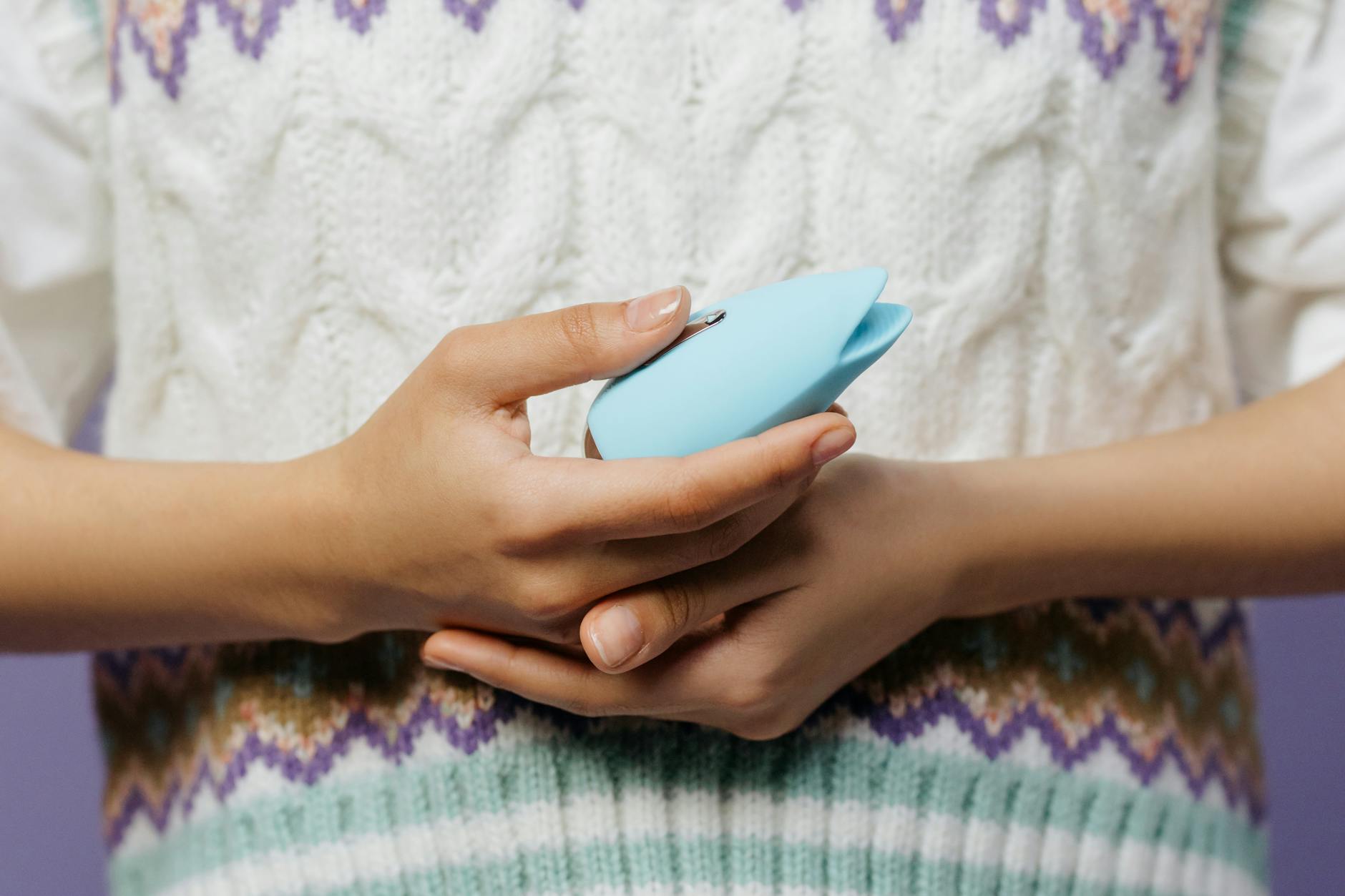
Let's start with the real resistance
Your partner thinks toys mean something is wrong. With you, with them, with the relationship. That's the conversation nobody's having, which is why it keeps happening in silent frustration instead of out loud.
Here's what I hear in my practice: "He thinks I don't want him anymore if I suggest a vibrator." "She's worried I'm only interested in the toy, not in her." "They think I'm saying our sex life isn't good enough." Those fears are real. They're also fixable.
The trick isn't to convince your partner that toys are necessary. It's to help them see what's actually happening: you're not replacing them, you're expanding what's possible together.
What's really going on beneath the "toys are unnecessary" response
When someone resists the idea of a lemon clitoral vibrator or any adult toy, they're usually protecting one of three things.
First, their ego. Sex is one of the few arenas where people still feel like their body should "be enough." That's nonsense, but it runs deep. A vibrator can feel like a referendum on their skills or their desirability. It's not, but your partner's brain might frame it that way.
Second, their understanding of what toys actually do. If they think vibrators are a substitute for partnered sex rather than an enhancement, they'll resist. This is pure information gap. They've absorbed the cultural narrative that toys are for solo play or for people whose partners aren't available.
Third, something about the relationship itself. Maybe sex hasn't felt connected in a while. Maybe there's resentment lurking. Maybe they're feeling distant from you generally. A toy request can bump up against that pre-existing tension and feel like a betrayal instead of an invitation. That's the one that actually needs addressing first.
The conversation setup (timing matters more than you think)
Don't bring this up during sex. Don't bring it up after sex when you're both naked and vulnerable. Don't bring it up in a text.
Bring it up when you're both clothed, fed, not tired, and not in the middle of a conflict. A walk works. A car ride works. Anywhere you're side-by-side and not making eye contact, which paradoxically makes honest conversation easier.
Start with warmth, not defensiveness. "I've been thinking about something I want to try with you, and I want to talk about it before I do anything. I'm not asking for permission, but I do want your input." That framing says: I'm thinking of us as a team, I value your perspective, and I'm going to move forward thoughtfully.
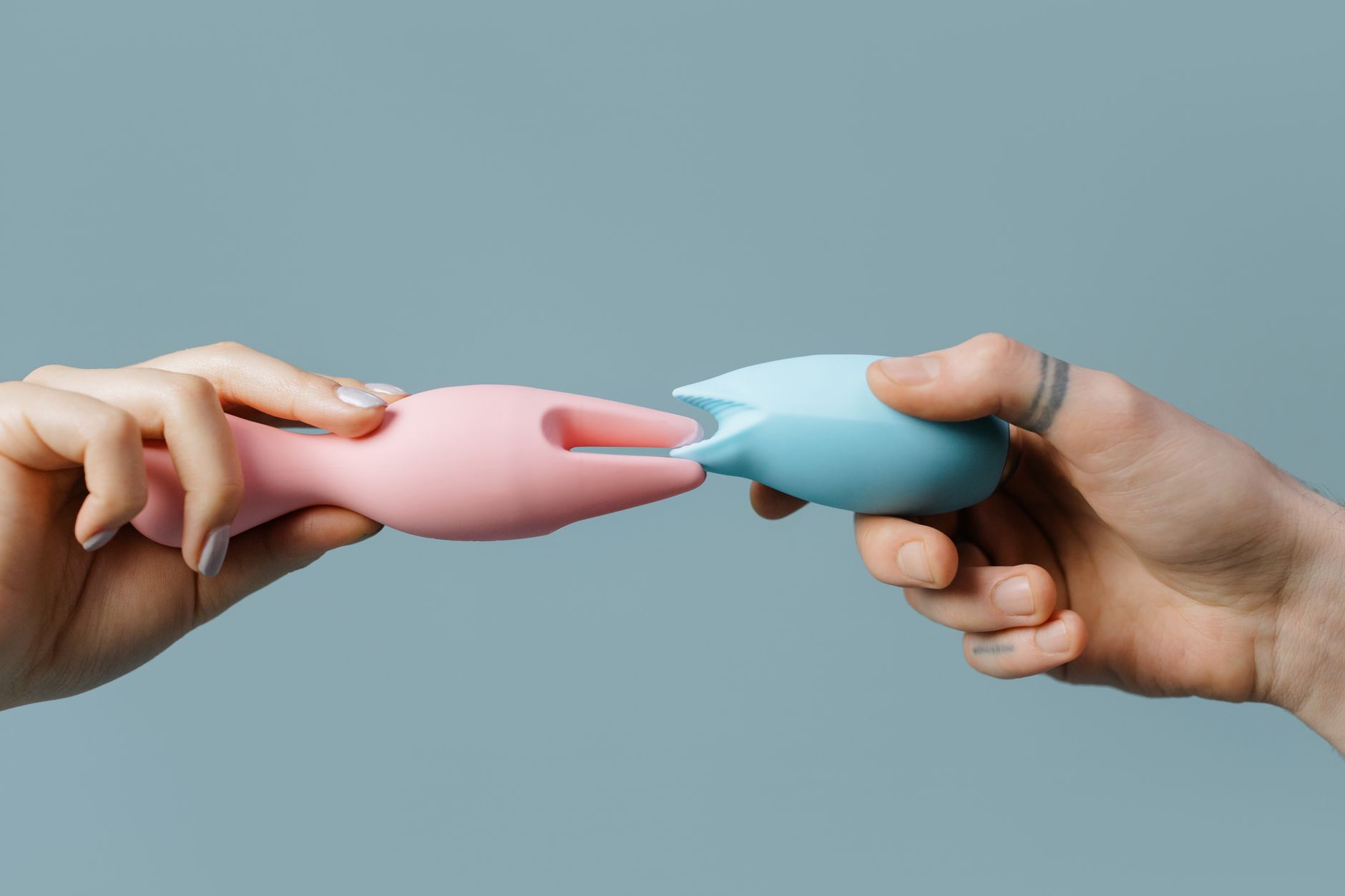
Photo by cottonbro studio on Pexels
The reframe (what you're actually offering)
Don't say: "I want to bring a toy into our sex life." That sounds like an upgrade that implies the current version is deficient.
Say instead: "I've been curious about exploring something new together. There's a lemon clitoral vibrator that's designed differently than most toys. The way it works is actually closer to what hands can't quite do alone. I want to try it with you because I think it could be a fun way to explore something neither of us has done before."
Then explain the actual mechanics of what a lemon clitoral vibrator does. It uses gentle suction stimulation rather than traditional vibration. The sensation is different enough that it opens up new sensations for both of you. It's not about intensity. It's about novelty, about learning your body together, about play.
If they ask "Why can't you just orgasm from penetration or from my hands," that's the ego question showing up. Your answer is gentle and factual: "My body just works that way. Most people with vulvas do. It's not about you or what you do. It's about what my nervous system responds to. And honestly, I think exploring this together could be really hot."
The actual invitation (making it collaborative)
Once you've set the frame, the ask changes. You're not asking your partner to accept a toy into your sex life. You're inviting them into an experiment.
"I want us to try this together. I want you to be part of it. You could hold it. You could help figure out what feels good. You could see what my body does when I'm getting stimulated in a way that really works for me. That's not me leaving you out. That's me letting you in closer."
That last line matters. Because really, that's what's happening. When you use a lemon clitoral vibrator with a partner, they're not watching from the sidelines. They're inches away from you, feeling your responses, learning what gets you there, adjusting based on what they observe. It's intimate in a different way than usual.
If your partner is interested but hesitant, offer to show them the product itself. Not as a sales pitch, but as a way to demystify it. Something about holding an actual object makes it less scary and more real. They can see that it's not some elaborate contraption. It's well-designed, beautiful even, and clearly made with thoughtfulness.
Addressing specific fears (the ones nobody says out loud)
"Does this mean you don't want me anymore?" Absolutely not. If anything, you want more exploration with them. You're not looking for an escape from your partnership. You're looking to deepen what happens within it. Share that directly: "I want us to try new things together. That means I want you there."
"Will I become unnecessary if you use a toy?" This is where you name the actual value of partnered sex. A toy doesn't replicate what a partner does. It does one specific thing well. Your partner brings presence, touch, connection, their own arousal, surprise, vulnerability. Those are irreplaceable. Say it: "A toy does one thing. You do everything else."
"Isn't this kind of embarrassing to talk about?" Only if we keep treating it like a taboo. By bringing it up calmly and matter-of-factly, you're normalizing adult sexuality in your relationship. That's actually a strength. Couples who can talk about sex, logistics, and desires openly have better outcomes across the board.
"What if I don't like watching or participating?" Then they don't have to. "If this doesn't feel comfortable for you to be involved in, that's okay. I can explore this alone. But I wanted to offer the chance to try it together first because I think it could be fun for both of us."
That takes the pressure off entirely. And often, once the pressure is gone, curiosity shows up.
The trial (making the first experience actually good)
If your partner agrees to try, remove as many obstacles as possible.
Pick a time when you're both rested. Create privacy and comfort. Don't frame it as "testing" the toy like you're running an experiment. Frame it as foreplay, as play, as something sensual you're doing together.
Start slow. Use lube. Let your partner hold the toy if they want to. Guide them. "Lower, gentler, okay hold it there." That participation keeps them engaged rather than feeling like a spectator.
The goal isn't orgasm. The goal is discovery. What does this feel like? What's different? What does your partner notice about your body's response? Afterward, talk about it. "That was interesting because..." "I liked when you..." "Next time I want to try..." That debrief is where the real bonding happens.
When they still say no (and what that might actually mean)
Some partners will hear everything you've said and still say no. That's a boundary worth respecting on the surface, but it's worth exploring underneath.
If it's "No, I'm not comfortable," dig gently: What specifically doesn't feel comfortable? Is it watching? Is it the toy itself? Is it the idea of you having pleasure they're not directly providing? Is there something in the relationship that feels off?
If it's "No, toys are unnecessary," ask: What would make it feel necessary? What would have to change for you to be curious? Is this about the toy, or is this about feeling disconnected?
Sometimes the resistance isn't actually about the vibrator. It's about intimacy that's faded, about sex that's become routine, about feeling unseen by each other. A lemon clitoral vibrator can't fix that. But an honest conversation about it can.
If after those conversations your partner still refuses, you have a choice: respect the boundary, or recognize that a mismatch in sexual needs and openness might be something you need support working through together. That's what couples therapists are for.
The longer game (building ongoing conversation)
Introducing one toy isn't the point. The point is opening a channel where pleasure, curiosity, and sexuality can be discussed without shame or defensiveness.
Once you've had this conversation and experimented together, future conversations get easier. You've already established that you can talk about bodies and sensations without it being a threat. You've proven that exploration strengthens rather than weakens your connection.
Some partners who were initially skeptical become genuinely interested. Others stay neutral but supportive. Either way, you've shifted something fundamental: from secrecy to openness, from assumption to conversation, from isolation to collaboration.
That shift is where real intimacy lives.
FAQ: Partners and Lemon Vibrators
How do I know if my partner is actually open to this or just saying yes to make me happy?
Pay attention to their body language and questions during the conversation. Are they asking genuine questions or just nodding? During the experience, are they present and curious or checked out? After, do they want to talk about it or avoid it? Genuine openness shows up as engagement. People-pleasing shows up as compliance without curiosity. If it's the latter, the conversation might need a reset: "I want you to actually want this, not just do it for me."
What if my partner is interested but wants to try something less intense first?
That's actually wise. Start with hands and fingers exploring together. Talk about sensations. Build comfort with the conversation itself. A lemon clitoral vibrator like the ones Hello Nancy's Lems Shop offers can be introduced once the groundwork of communication is solid. Rushing into new tools before you've built communication trust tends to backfire.
Should I show my partner videos or articles about how vibrators work?
It depends on your partner's learning style. Some people need visual or written information to feel secure. Others find that feels clinical and off-putting. You know your partner. If they respond well to research, share something from a trusted source. If they're more intuitive, stick with conversation and demonstration.
What if my partner agrees but then gets uncomfortable during the actual experience?
Stop immediately. No judgment. This is information. Afterward, ask what came up. Sometimes the fantasy of something is easier than the reality. Sometimes specific sensations trigger unexpected emotions. Sometimes it's just not the right time. That's all okay. You can try again later, try something different, or decide it's not for you together. The point is that you can communicate about discomfort without shame.
How do I bring this up again if the first conversation didn't go well?
Wait. Give time for the initial reaction to settle. Then try once more in a low-pressure way: "I'm still thinking about what we talked about. I'm curious if you are too." If it's still a no, respect it for now. Circling back repeatedly feels like pressure and erodes trust. Sometimes people need months to warm up to an idea. Sometimes they never do. Your job is to communicate, not to convince.
Is there a way to use a lemon clitoral vibrator without my partner knowing?
Technically yes. But it circles you back to secrecy, which is usually where the real distance in a relationship lives. If you're hiding this from your partner, that's worth examining. Why do they need to know? Because honesty is the foundation of intimacy. Can you have intimacy without telling them? Sure. Can you have it while hiding things? Much harder.
Your move
Introducing a lemon clitoral vibrator to a partner who thinks toys are unnecessary isn't actually about the toy. It's about building a relationship where you can say what you want, explore what you're curious about, and invite your partner into that world without shame.
Some partners will step through that door immediately. Others will take longer. Some won't. But the conversation itself changes things. It says: I trust you enough to be honest. I care about your perspective. I want us to explore this together.
That's the real magic. The toy is just the vehicle.
If you're ready to have this conversation and want to explore what a lemon clitoral vibrator actually does, Hello Nancy's Lems Shop has resources and products designed with exactly this kind of thoughtful, connected sexuality in mind. No judgment, no pressure. Just good design and the freedom to ask questions.
Ready to move from conversation to connection? Get in touch if you want to talk through your specific situation with someone who understands relationships.